From headlines to hostilities: How Israel and US media beat the drums of war with Iran
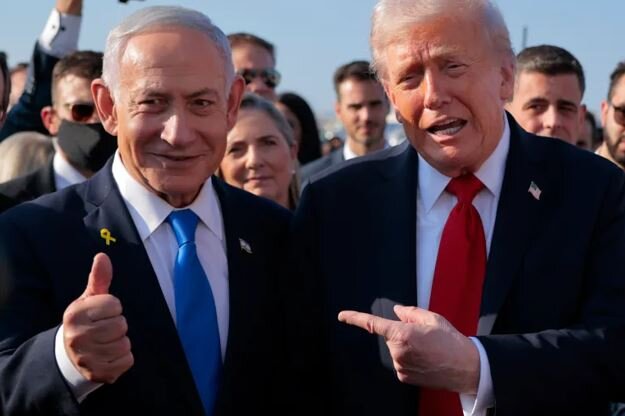
TEHRAN – The latest episode of The Tucker Carlson Show has intensified debate over who is pushing the United States toward confrontation with Iran.
Titled “Israel’s Sinister Agenda to Use the U.S. Military to Defy Trump’s Plan for Peace,” the program was released just before Iran and the United States held a third round of indirect talks. Its publication came as war rhetoric escalated in Washington and Tel Aviv, raising serious questions about foreign influence, media narratives, and the risk of a broader regional confrontation.
In his podcast, the former Fox News host said President Donald Trump is hesitant to launch war on Iran because most Americans do not want another Middle Eastern conflict and also because of the consequences such a war would carry for the United States. He acknowledged that a U.S. war on Iran could prove devastating for American forces stationed across the region, particularly given Iran’s retaliatory capabilities and missile power. “There are tens of thousands of Americans in the region, of course, in uniform and out. They could be hurt or killed,” he said.
Since early February, Iran and the United States have held three rounds of indirect talks, the latest round of which ended on Thursday, with both sides exchanging proposals and exploring ways to prevent escalation. The continuation of diplomatic engagement stands in contrast to growing calls for confrontation. From Tehran’s perspective, these negotiations reflect a consistent policy: disputes should be addressed through dialogue, even after years of sanctions, economic pressure, sabotage operations, and hostile rhetoric.
At the same time, Iranian officials have emphasized that diplomacy does not equal weakness. Tehran has made clear that it will defend the country if attacked and has warned that a U.S. strike would not remain limited in scope. Given Iran’s missile capabilities and its strategic depth in the region, any military confrontation could quickly expand beyond a contained scenario.
Carlson argued that Israel is pushing the United States toward confrontation not simply out of immediate security concerns, but out of political calculation.
According to his analysis, Israeli leaders may view the current political climate in Washington as uniquely favorable — and possibly temporary. He suggested that public opinion in the United States has become more divided over unconditional support for Israel, particularly among younger voters and segments of both major parties. In that context, Carlson said Israeli officials may see the Trump administration as their last clear opportunity to secure decisive American backing before bipartisan consensus weakens further. “Everybody knows the only reason we’re having this war is because Israel wants it. This is their last chance, they believe. This presidency is the last presidency where they’re going to have unequivocal bipartisan support,” Carlson commented.
He also criticized major U.S. media outlets for amplifying the push toward war with Iran. “What's so amazing is that Israel, which at least is acting in what it perceives to be its own national interest, is joined by its shills in the United States, of course. But really, its only other ally in this is the American news media, whose job it is to tell you the truth and inform you as to what's happening — to tell you, hey, wake up, the world could be changing and it's going to affect you and your family. That's their job.”
He described outlets such as Fox News, The Wall Street Journal, and New York Post as consistently framing Iran as an immediate military threat. According to Carlson, this type of coverage conditions the public to view military action as a rational response, while marginalizing voices that warn about the costs and consequences of another Middle Eastern war.
In recent weeks, Axios has also published reports highlighting Israeli security assessments and warnings about Iran’s nuclear program and regional activities, often emphasizing urgency and worst-case scenarios. Critics argue that this broader pattern within segments of the American media landscape places Israeli and U.S. security concerns at the center of coverage, while giving comparatively less attention to Iran’s diplomatic messaging and its stated defensive doctrine.
Over time, such framing can narrow the range of acceptable debate. When headlines consistently stress imminent threats and shrinking timelines, military options begin to appear pragmatic, while continued diplomacy is portrayed as risky or ineffective.
From Iran’s standpoint, however, the picture is more complex. Tehran remains a signatory to the Non-Proliferation Treaty and insists that its nuclear program is peaceful. It continues to engage in negotiations despite sustained economic pressure. Iranian officials argue that sanctions, covert actions, and repeated threats of force are the primary drivers of instability — not Iran’s defensive posture.
Three broader dynamics are now visible. First, U.S. policy toward Iran appears increasingly influenced by the strategic calculations of a close regional ally. Second, domestic American opposition to another war — along with the tangible military risks acknowledged even by critics of Iran — acts as a restraint on escalation. Third, media narratives play a decisive role in shaping public consent, often privileging confrontation over compromise.
The central question, therefore, is not simply whether the United States will strike Iran. It is whether American policy will reflect its own long-term national interests — or the strategic priorities of Israel. As Tehran-Washington talks are set to continue in Vienna and deterrent messages are exchanged, the region once again stands between sustained diplomacy and a conflict whose consequences could extend far beyond its opening strike.
Leave a Comment